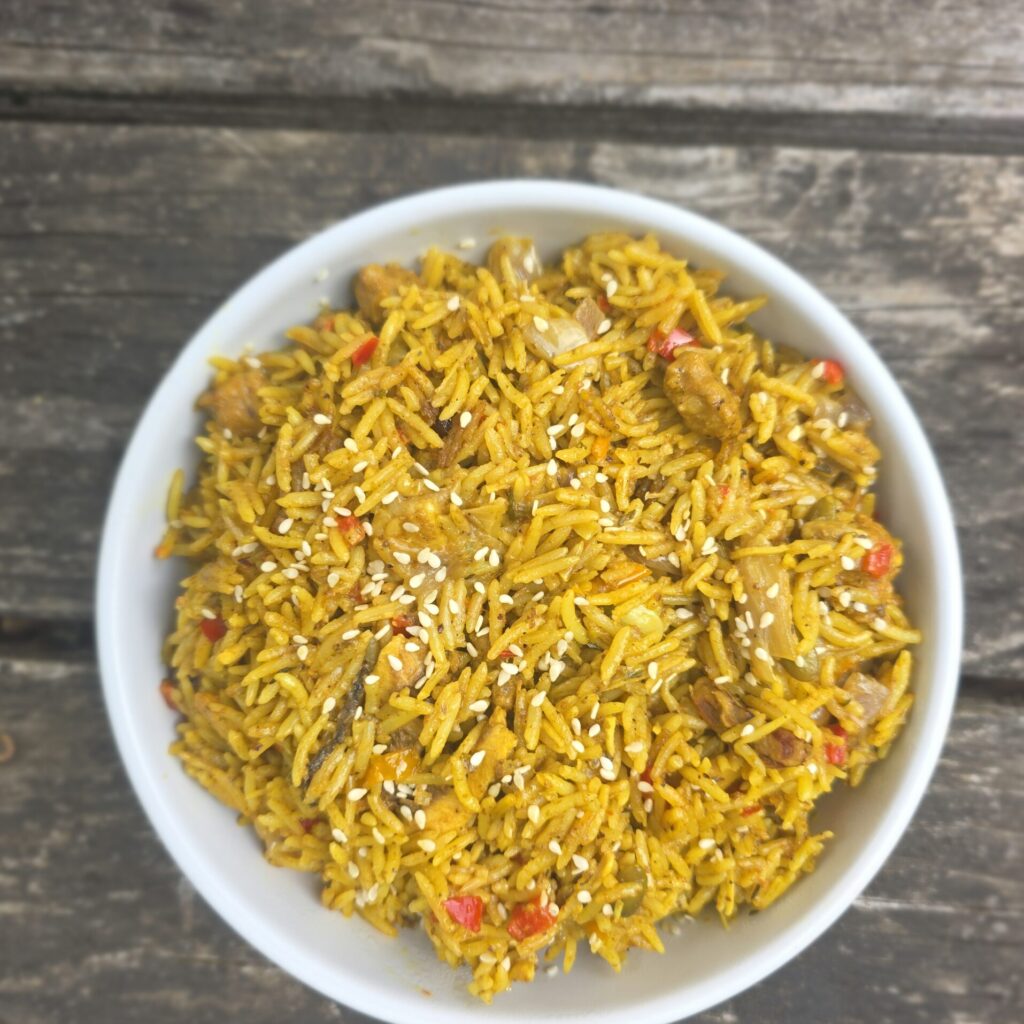
The Power of Layered Living In the kitchen, nothing great happens by accident.This coconut spiced native rice is a reminder that every layer matters—from the base to the seasoning, to the final garnish. Each ingredient plays a role. Each step builds flavor and life is no different.
God doesn’t rush the process.
He layers us:•
Through experiences•
Through challenges•
Through growthJust like the rice absorbs the richness of coconut milk and spices, we are called to absorb wisdom, discipline, and grace.📖 “Let your roots grow down into Him, and let your lives be built on Him.” — Colossians 2:7
Even the unexpected ingredients—the heat of the pepper, the crunch of the nuts—remind us that not everything in life is soft or predictable. Yet, all things work together to create something beautiful. In your business, your family, your ministry:• Stay consistent• Stay intentional• Trust the process because excellence is not accidental—it is built, step by step. So as you cook, remember: You are not just making a meal…You are practicing purpose, patience, and presence.
A Birthday I’ll Never Forget. It was my 10th birthday—the kind of milestone a child looks forward to with bright eyes and high expectations. But that year came with quiet changes. I had just been transferred from a private elementary school to a public one. Things were a little tight at home, though I didn’t fully understand it then. Still, my father, in his usual loving way, promised me something small—some sweets, maybe biscuits. In Nigeria, that was enough to make a child feel celebrated. My hair was beautifully braided in neat cornrows, and I went to bed that Sunday night imagining how I would “show up and show off” on Monday. But morning came with a different reality. My father gently told me he couldn’t get the sweets he had promised. Instead, he asked me to accompany him to Subuola Street in Surulere, perhaps hoping to find help from family. Then came the moment that broke my little heart—he told me to go to school just like that. No treats. No celebration. No sign that it was my birthday. I went quietly, carrying disappointment heavier than my school bag. But God wasn’t done writing that day’s story. On our way, we encountered a man we all knew as —Baba Oniwe, the book seller. He was a fixture in our community, selling everything from used textbooks and pencils to brooms, canes, and snacks. Truly, everything a school child could need—or fear. He made a simple suggestion: “Why not buy kokoro for her to share in school? ”Kokoro—crispy cornmeal sticks. Not cake. Not sweets. Not what I had imagined. In fact, I had never heard of anyone celebrating a birthday with kokoro. But my father agreed.With the little he had, he bought as much as he could. And though I didn’t realize it fully then, that moment was soaked in sacrifice.“If you then, being evil, know how to give good gifts unto your children, how much more shall your Father…” — Matthew 7:11.
I went to school still carrying my sadness. I said nothing about my birthday. I felt shy… even a little ashamed. Kokoro didn’t feel like something worth celebrating. But just before the school day ended, I quietly told a friend, almost in a whisper: “Today is my birthday… I brought something to share.”What happened next changed everything. She jumped up—literally stood on the table—and announced it to the entire class. Suddenly, the room filled with voices singing Happy Birthday. Laughter followed. Smiles everywhere. The kokoro? Gone in minutes. They loved it. Some even asked for more. And just like that, something shifted in me.The sadness lifted. My face brightened. I laughed freely. I joined in the joy I thought I didn’t deserve that day.“Weeping may endure for a night, but joy cometh in the morning.” — Psalm 30:5I went to school sad… and came home full of joy. Later in life, I began to understand something deeper. Some of those children had never had a birthday celebrated before. No cake. No song. No attention. And here I was, thinking I had nothing.That day taught me gratitude. My parents were not rich, but they gave us everything that mattered—love, care, provision, and sacrifice. We had food, shelter, and dignity. And in that moment, I saw my father through a different lens—not as someone who couldn’t provide sweets, but as someone who gave everything he could.“Every good and perfect gift is from above…” — James 1:17. If an earthly father can go to such lengths to make his child happy, how much more our Heavenly Father?The One who feeds the birds of the air… The One who calls me His own… The One who gave His Son so I could have life.“For God so loved the world, that He gave His only begotten Son…” — John 3:16“I am the apple of His eye.” — Zechariah 2:8 . That day, through something as simple as kokoro, God showed me a truth I carry to this day: I am seen. I am loved. I am provided for. And truly—“Better is the end of a thing than the beginning thereof.” — Ecclesiastes 7:8. What started in disappointment ended in joy, laughter, and a lesson I will never forget.
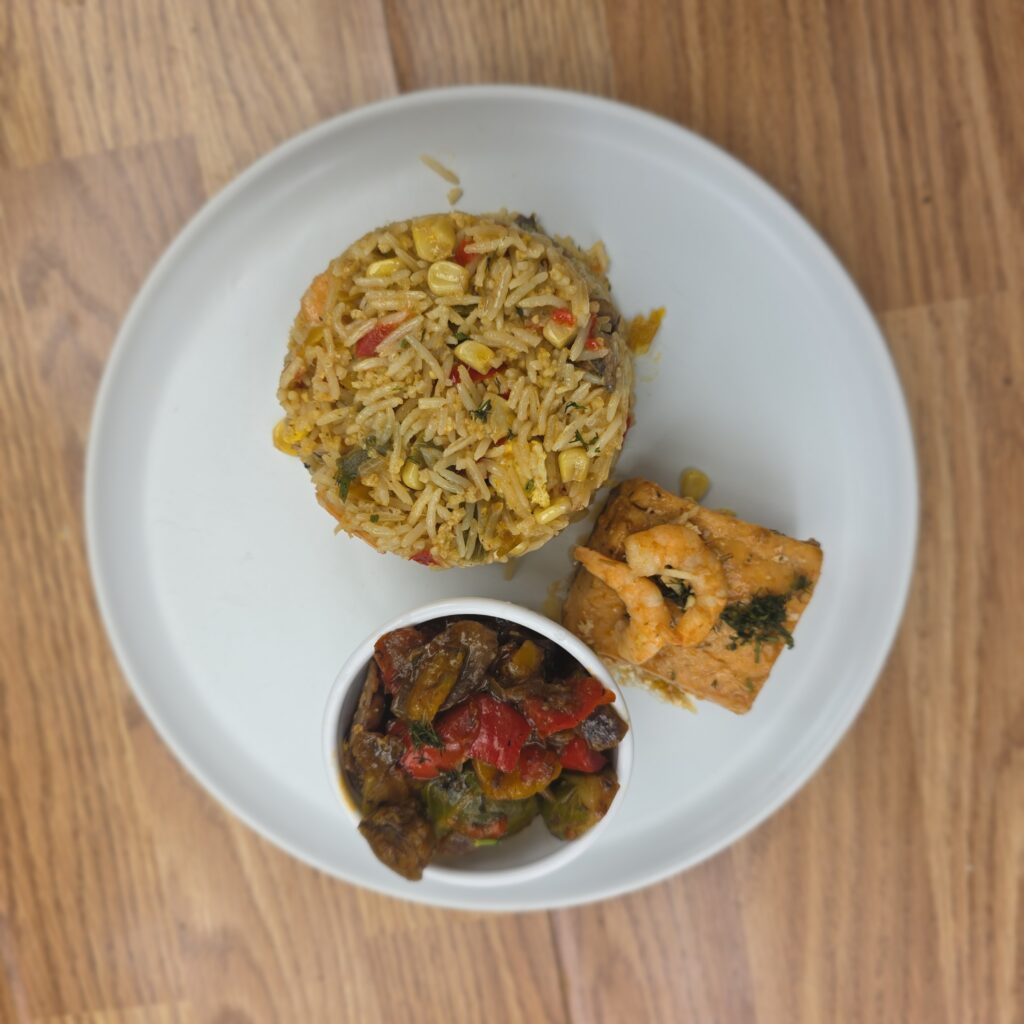
There’s something special about a meal that brings together comfort, culture, and creativity—and this Coconut Seafood Rice with Millet Stir-Fry does exactly that. This dish is a beautiful fusion of rich, creamy coconut rice and a bold, flavor-packed seafood and veggie stir-fry. It’s one of those meals that feels indulgent, yet nourishing at the same time. The coconut milk and fish stock infuse the rice with deep flavor, while the stir-fried millet adds texture, heartiness, and a wholesome twist. What I love most about this recipe is how it transforms simple ingredients into something extraordinary. The shrimp, perfectly seasoned with suya spice, brings warmth and depth. The air-fried whiting adds a smoky, savory touch, while the vibrant bell peppers and sweet corn give freshness and color. And let’s not forget the layers of flavor—green herb paste, garlic, crayfish, and that hint of ginger miso honey dressing that ties everything together so beautifully. This is the kind of meal you make when you want something different… something that tells a story on your plate. Whether you serve the coconut rice and millet stir-fry side by side or mix them together into one satisfying bowl, every bite is rich, textured, and deeply comforting.
✨ Pro Tip: Day-old millet works best here—it gives that perfect stir-fry texture and prevents sogginess.This dish is more than just food—it’s an experience. Bold, vibrant, and full of personality.
Tentmakers in the Bible. When Business Becomes Ministry 📖 Scripture Focus Acts 18:1–3───🌿 Devotional Thought When we think of ministry, we often imagine pulpits, microphones, and full-time church work. But the life of Paul the Apostle reveals a different picture —one where hands were busy with work while the heart was fully committed to God. Paul was not only a preacher; he was a tentmaker. Alongside Aquila and Priscilla, he worked with his hands to sustain himself while advancing the gospel. This is powerful: God did not separate Paul’s work from his calling—He used it. 🔥The Heart of Tentmaking Tentmaking is more than a job. It is a mindset:• A willingness to build while serving• A commitment to steward your skills• A decision to let your work fund your purpose . Paul didn’t wait for perfect conditions or full financial support. He worked, he preached, he built—and God moved through all of it. 💼 Business Lessons from Tentmaking. 1. Your Work Is Not a Distraction Sometimes we feel like our business or job is “in the way” of our calling. But what if it’s actually part of the assignment? Your kitchen, office, studio, or marketplace may be your mission field. 2. Skill Is a Gift from God. Tentmaking required craftsmanship, patience, and discipline.Your skills—whether in cooking, design, leadership, or service—are not random. They are tools placed in your hands for impact. 3. Financial Wisdom Honors God. Paul chose not to be a burden to others (1 Thessalonians 2:9). He modeled responsibility and diligence. Building a business, managing income, and creating stability are not “unspiritual”—they are acts of stewardship. 4. Influence Happens in Everyday Spaces. Paul didn’t only reach people in synagogues—he met them in the marketplace.Your business allows you to: Build relationships• Demonstrate integrity• Reflect Christ through excellence Sometimes, your lifestyle will preach louder than your words.───🌱 Reflection Ask yourself:• What skills has God placed in my hands? • Am I seeing my work as separate from my calling?• How can my business become a platform for impact? 🙏 Prayer “Lord, help me to see my work the way You see it. Teach me to steward my skills, my time, and my resources with wisdom. Let my business become a vessel for Your glory and a tool for impact. May I build diligently and serve faithfully, just like Paul. Amen.”───✨ Closing Insight. You don’t have to choose between business and calling. Like Paul the Apostle, you can build and serve at the same time.bYour hands can work…and your life can still preach.