OMO DAROSHA ( LAGOS GIRL)

OMO DAROSHA:

PACKAGING WITHOUT SUBSTANCE?

NOT THIS ONE O! 😄💧If you grew up in a Nigerian home, you already know this line very well:👉 “You this child ehn… stop behaving like omo Darosha! ”Translation: You have finished everything, there is no money, but you’re still doing shakara like Dangote’s cousin. Ironically, the real Darosha is somewhere in heaven saying: “Please remove my name from this slander. ”Because Chief Candido João Da Rocha was not a waster. He was a strategist.THIS DAROSHA DID NOT PLAY WITH DESTINY. While some people were praying for money and refusing to work, Darosha was busy solving problems. Lagos Island people were thirsty. Others were complaining. Darosha said: “Where is my borehole? ”Boom 💥Water started flowing. Money followed water. That’s how he became the first water millionaire. Not first prayer warrior. Not first motivational speaker. First solution provider.📖 “Seest thou a man diligent in his business? He shall stand before kings.”— Proverbs 22:29. No be motivational quote. Na instruction.

OMO DAROSHA ≠ PRODIGAL SON

The Bible gave us the Prodigal Son. Collected inheritance.Bought champagne for people that don’t know his surname.Finished money. Ended up with pigs. 🐖Darosha?❌ No pigs❌ No broke story❌ No motivational apology. He invested. He lent money. He bought property. He enjoyed life with sense. Yes, he even sent dirty clothes to Britain for washing. But notice — he still had money left.📖 “The blessing of the Lord maketh rich and adds no sorrow.”— Proverbs 10:22. Some people enjoy today and cry tomorrow. Darosha enjoyed today and tomorrow. DESTINY DOES NOT ANSWER PEOPLE THAT DON’T MOVE. Darosha heard the story of his lineage and said:“I must go and establish myself.”He moved back to Lagos. Same thing God told the children of Israel:“Leave Egypt, go to your land flowing with milk and honey.”But God didn’t say it would be easy. Destiny requires:• movement• courage• sometimes spiritual boxing 🥊📖 “Write the vision and make it plain…”— Habakkuk 2:2.You cannot stay in one place shouting “God when? ”At some point, you must move your legs. EVEN JESUS DID NOT DO LIFE SOLO. Darosha had workers.He had partners. He had helpers. Because no man is an island — even Island has bridge.📖 “And Jesus found favour with God and man.”— Luke 2:52. First God.Then man. Anybody that says “I don’t need anybody” will soon need somebody.

FINAL LESSON (VERY IMPORTANT 🚨).Dear Christian, Stop using omo Darosha to describe wastefulness.The real lesson is this:• Stop packaging without purpose• Stop spending to impress• Start building legacy• Start solving problems. And most importantly:👉 What are you doing for Jesus? Money is good. Impact is better. Heaven is the goal.📖 “Let your light so shine before men…”— Matthew 5:16. May we not live like the prodigal sons when God is calling us to be wise kingdom builders.Amen 🙏😂

OMO DAROSHA

Omo Darosha vs The Prodigal Son:

A Lesson in Wisdom, Wealth, and Water. Growing up, there was a phrase that could humble you faster than your mum calling your full government name:“Stop behaving like omo Darosha!”If you grew up in a Nigerian household, you already know. That phrase wasn’t a compliment. It was reserved for any child who finished provisions in two days, spent transport money on ice cream, or tried to impress friends with borrowed riches.

In short: packaging without substance. Ironically, the real Darosha, Chief Candido João Da Rocha (1860–1959), was the exact opposite of wasteful.So how did a man known for wisdom and wealth become the poster child for reckless spending? Let’s talk about it—Bible in hand, smile on face. Who Was the Real Darosha? Chief Candido João Da Rocha was a Brazilian-born Nigerian businessman whose story reads like a divine strategy meeting.• Born: 1860, in Bahia, Brazil• Roots: Son of João Esan Da Rocha, a former slave who returned to Nigeria and built a business•

Base: Lagos Island After his father’s death, Candido didn’t fold his hands and wait for destiny. He expanded the family business and became one of the first documented millionaires in Nigeria. And no, this wasn’t “Yahoo” wealth. This was hard work, vision, and consistency wealth.“Seest thou a man diligent in his business? he shall stand before kings; he shall not stand before mean men.”— Proverbs 22:29. The First Water Millionaire (Yes, Water!)While others were complaining about Lagos Island’s water problems, Darosha did what wise people do: he solved a problem.He built a borehole and water fountain at his famous Water House on Kakawa Street, supplying clean water to residents and colonial officials.People were thirsty. Darosha said, “Hold my ledger.”That one idea earned him the nickname:

👉 “The First Water Millionaire.” Lesson?Money flows to solutions, not complaints.Just like Joseph in Egypt, Darosha saw a need and positioned himself wisely. Darosha Was Not the Prodigal Son . Now let’s address the confusion.The Bible tells us about the Prodigal Son—the one who collected inheritance, sprayed money on friends, women, and vibes, and later found himself eating with pigs.“And when he had spent all, there arose a mighty famine…”— Luke 15:14. Darosha? Nope. Not that guy.• He invested wisely• He was a money lender• He owned property (including the famous Bonanza Hotel)• He enjoyed life, yes—but with structure. Rumor even says he sent his dirty laundry to Britain to be washed. Was it extravagant? Maybe. But note this: only people with sustainable income can maintain luxury without collapse. Darosha worked hard and enjoyed hard. Balance.“The blessing of the Lord, it maketh rich, and He addeth no sorrow with it.”— Proverbs 10:22. Movement Is Part of Destiny. One powerful part of Darosha’s story is movement.He was told about his lineage. He heard the story of where he came from. And then he moved back to Lagos to establish himself.That reminds me of the children of Israel. God told them to leave Egypt and return to the land flowing with milk and honey. It wasn’t easy. They had to fight. They had to trust God. Destiny doesn’t happen sitting down.“Write the vision, and make it plain upon tables, that he may run that readeth it.”— Habakkuk 2:2. You can’t stay in one position forever. You must move to your place of assignment. Prayer is important. Planning is important. Movement is essential. No Man Is an Island (Even Jesus Had Disciples) Darosha didn’t do life alone. He had people working with him and for him. Because no matter how anointed you are, helpers matter.“And Jesus increased in wisdom and stature, and in favour with God and man.”— Luke 2:52. First God’s favor. Then man’s favor. Darosha had both. A Life of Impact, Not Just Income . Like Daniel, Darosha became relevant in his generation. He left footprints, not just bank accounts. But here’s the big question for us as Christians:• What are we doing for Jesus?• What impact are we making in our generation?• Do people see Christ in our daily lives—or just our Sunday outfits?“Let your light so shine before men, that they may see your good works, and glorify your Father which is in heaven.”— Matthew 5:16 . Impact is not only physical. It’s spiritual.

Final Thought So next time someone says “omo Darosha” to describe wastefulness, gently correct them—with love and small laughter. Because the real Darosha was:✔ Wise✔ Diligent✔ Visionary✔ Impact-driven. May we not live like the prodigal son when God has called us to be faithful stewards, kingdom builders, and solution providers.Amen 🙏

ONIDIRI – THE HAIR BRAIDER ( MY HEAD MY CROWN )

Onídìrì — My Head, My Crown

I opened my Instagram page on the 30th of September, 2025, and the post that lingered in my heart all day was Onídìrì by Adisa Olashile.I kept returning to it, again and again. I am a lover of photography, and this picture captured me completely. I studied everything — the woman’s face, the child’s attitude, the chair, the stool, the style. Luckily, the photographer shared the behind-the-scenes images, and I sat with them for almost an hour. My imagination started to travel. I saw the story behind it. The trade. The craft. The pride. Suddenly, I did not hate or resent my own irun dídì memories anymore.The image — a close-up of hands intricately braiding someone’s hair, the texture rich, the motion intentional — reminded me so much of me.It wasn’t just about hair.It was about memory.It was about culture.It was about pain.It was about beauty.It took me back memory Lane. The Woman, The Lap, The Hair . As a child, I dreaded Sunday afternoons. That was hair time. It meant going to the woman who would braid my hair with all the strength in her hands and none of the gentleness I prayed for. I cried — not only from the pain, but also from the smells, the atmosphere, the helplessness. She would force my head between her thighs, holding me down with no escape. Today, I don’t resent her anymore. I understand now — it was her livelihood. She worked with pride. She didn’t just braid hair; she preserved culture. And she gave me her best. Dídì — More Than Just Braids. Dídì is a traditional Yoruba braiding style — an inverted braid, the opposite of regular cornrows. But to call it just a style is to miss the point. Irun dídì is a story. A tradition. An art form rooted in Yoruba heritage. Braiding, in African and African-American cultures, carries layers of meaning:• Identity & Status — Styles communicate age, rank, marital status, even tribal lineage.• Spiritual Significance — The head (orí) is sacred. Hair is not just hair; it connects to destiny.• Community Bonding — Braiding is communal. A space of storytelling, laughter, and wisdom passed down.• Protection & Practicality — Styles shield natural hair from harsh climates and manipulation.• Resistance & Resilience — During slavery, braids became silent resistance: maps, messages, memory.• Artistry & Expression — Each parting, each pattern, is intentional — a display of creativity and cultural pride.

From Dry Fish to Yarn Dolls

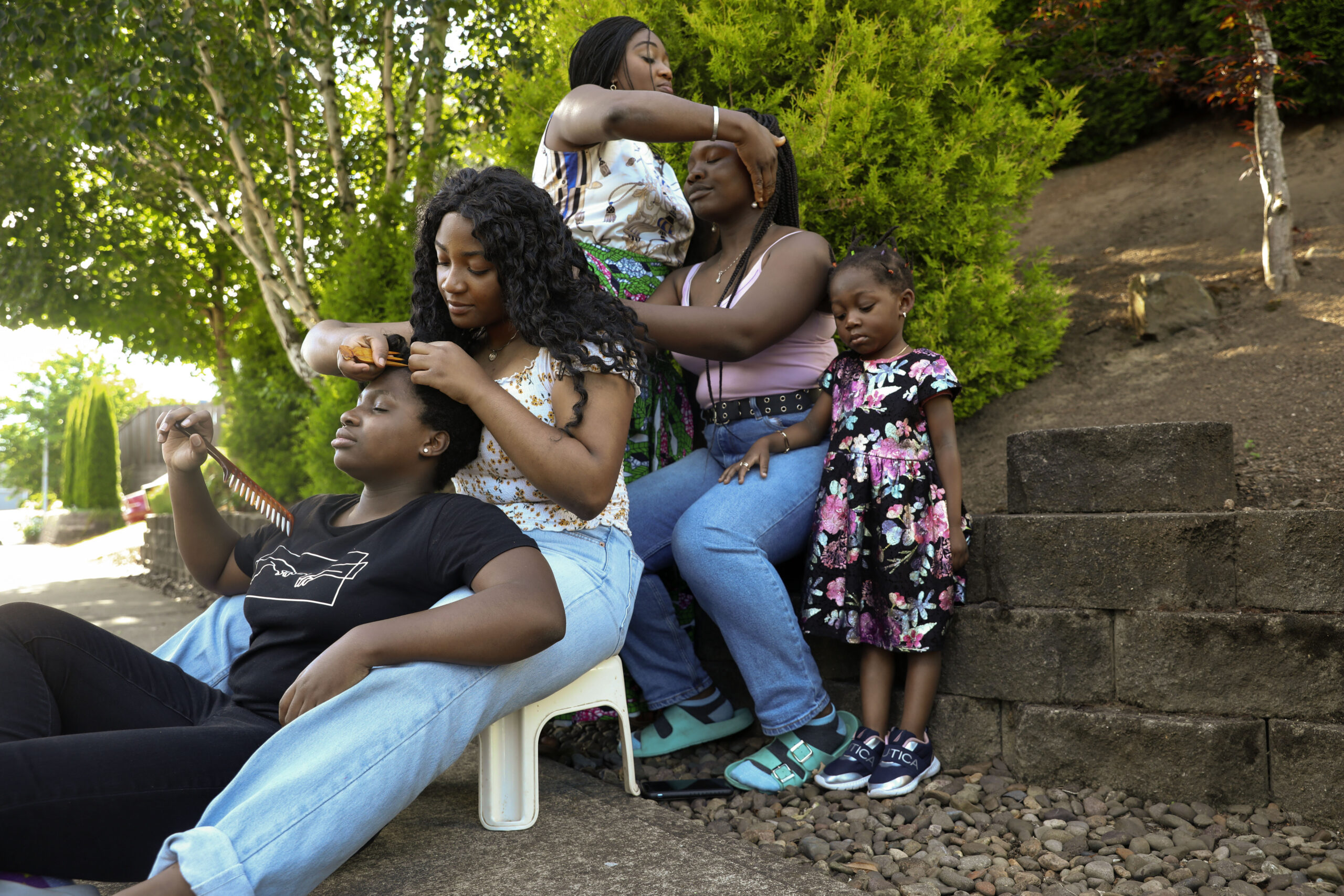
After those Sunday ordeals, my grandmother took over. She only knew how to do dídì.Her method? More tight laps. More tears. But unlike the hair woman, she came prepared with bribes — a plate stacked with dry fish to keep me still.Then came Lagos. Lagos Days: A House Full of Hair . When I think back to Lagos, I see hair everywhere. Not just strands and styles, but love, laughter, and heritage woven together.Every Sunday after lunch, the ritual began:• Aunty Toyin stood behind Aunty Funmilola, braiding her hair while she sat gracefully on a chair.• Aunty Yemisi perched on the little apótí (wooden stool), having her own hair worked on.• And I was there, on the floor — braiding my doll’s yarn hair or simply listening, wide-eyed, to the stream of conversation around me.Everyone was doing hair at the same time — pulling, parting, weaving, tightening. The room buzzed with gossip, playful teasing, testimonies, prayers, and laughter. What I didn’t know then was that this was more than a hair day. It was communion. It was culture. It was memory passed down, strand by strand.Years later, we recreated that photo — women lined up in sequence, each one braiding the next. And I saw it clearly: this is heritage. This is love handed down. This is how crowns are shaped. During the COVID lockdown, I recreated those Lagos memories in a photo shoot. To this day, it remains one of the most beautiful things I have ever done.

My Head, My Crown.

Now, as a salon owner, I carry those memories into every appointment.When someone sits in my chair, I don’t just see hair. I see history. I see heritage. I see a crown. And I don’t take it lightly. In Yoruba belief, not everyone is permitted to touch your head. The head (orí) is sacred. So whenever I lay hands on a client, I pray. I bless. I speak life as I work.The Bible says:“Whatever your hand finds to do, do it with all your might.” — Ecclesiastes 9:10“Blessed is the one who perseveres under trial… that person will receive the crown of life that the Lord has promised to those who love Him.” — James 1:12. For me, hair is not just work. It is ministry. It is healing. It is therapy. Some days, I am a stylist. Other days, a teacher, a prayer partner, a friend. I laugh with my clients. I cry with them. Sometimes, I even dance with them when life feels too heavy. This is more than a profession. It is a calling.

Coming Soon: My Head, My Crown.

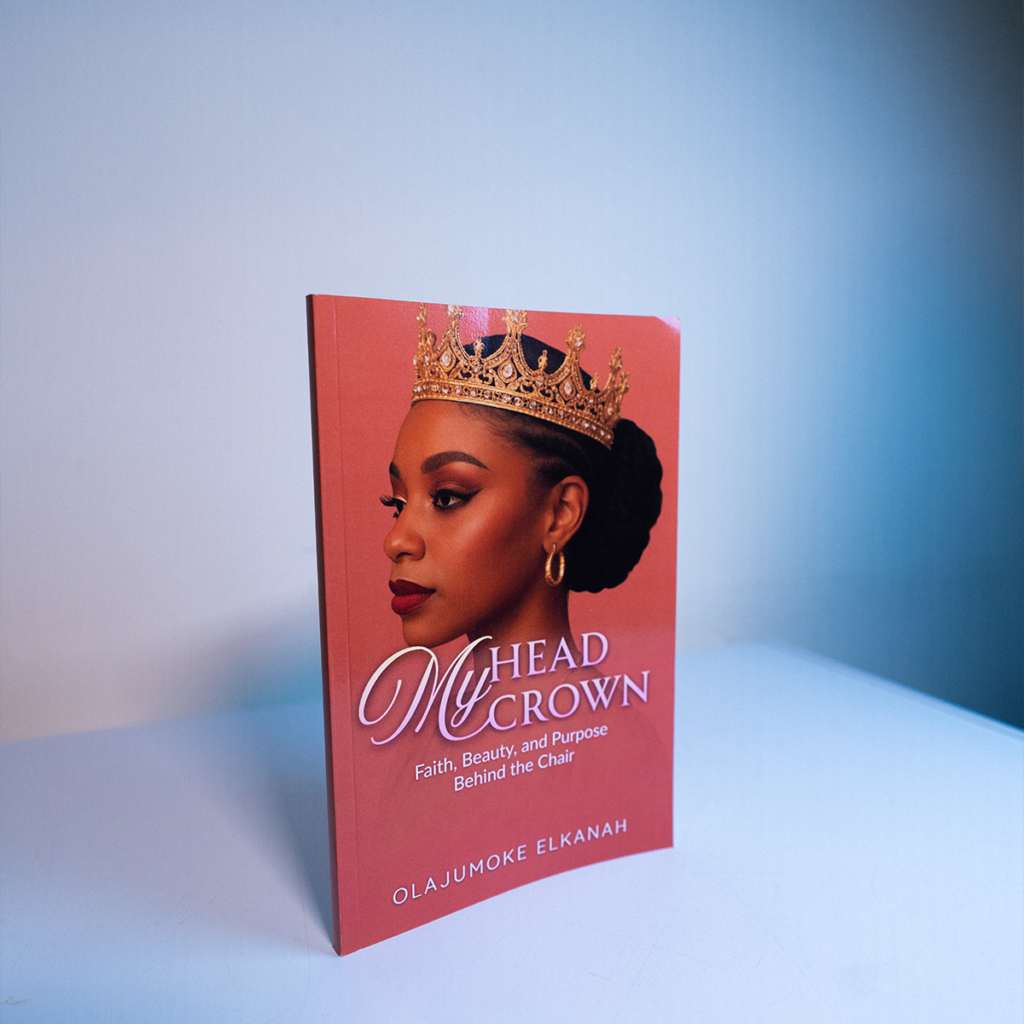
This blog post is just the beginning.A book is coming — My Head, My Crown — where I will share more stories from the salon chair, from childhood, and from the sacred space where culture, faith, and beauty intertwine. Until then, I pray you always wear your crown boldly.✨ Your head is blessed.✨ Your hair is sacred.✨ Your story matters.“But you are a chosen people, a royal priesthood, a holy nation, God’s special possession…” — 1 Peter 2:9You are royalty.Your hair is your crown.And your crown is your testimony.

WhatsApp Image 2025-09-12 at 8.11.00 PM

Walking into My Next Chapter, One Shoe at a Time

August 2025 rolled in, and as usual, I took it straight to God, birthday loading! 🥳 Since I turned 40, it’s been my tradition to fast for the number of days leading up to my birthday. It’s my way of seeking God’s face for the new year ahead.

But this time, something different stirred in my spirit. As I prayed, my mind drifted to my upcoming book yes, the one I’ve been writing (or at least thinking about writing) for the past 15 years. The theme? Shoes. Yep, you read that right. Shoes.

Now, before you raise your brow, let me tell you a hilarious and humbling story that sealed the deal for me never to give up on this book.

Flashback: The Great Shoe Disaster of 2017

It was the first Sunday of the year you know the drill. We dress up in our finest to give God our first praise. I had my outfit laid out: beautiful dress, matching accessories, and of course, those killer heels. I was also scheduled to lead praise and worship that morning. Everything was going great… until it wasn’t.

Just five minutes before I was to mount the altar, I stood up from my seat near the front, took a few steps and then snap! I heard a tiny sound… and just like that, my elegant heel betrayed me. 😱 I could barely walk. Panic mode: ON.

I quickly called my daughter, begging to borrow her shoes (as if her size 5 feet would save me 😅). Then I remembered: I always keep a pair of emergency flats in the car. My old, dusty, slightly-battered-but-faithful black flats a.k.a. my “walkabout shoes.” And just like that, those forgotten shoes became my Sunday best!

I wore them, got on that altar, and worshipped like never before. I danced, jumped, and praised with zero care about fashion. That day, I lived the scripture:

“The stone the builders rejected has become the chief cornerstone.” 🙌

💥 Now, Back to the Present…

During this year’s fast, God asked me to do something wild something completely out of my comfort zone:

“Give away all your shoes… and keep only three. One for church. One for work. And one slippers.”

Excuse me, what?! 😳

You don’t understand I just got some brand-new additions to my shoe family. My closet was beginning to look like a mini boutique. How can they be leaving me now?

But obedience is better than sacrifice.

So here I am about to step into a deep spiritual exercise I never imagined. Starting a week before my birthday, I’ll be posting some of my beloved shoes on my personal Instagram page. Each pair will be prayed over for a minimum of 5 minutes, and each will go out with a scripture card attached. This continues all through the month of September 2025.

It’s not just decluttering. It’s a divine assignment. And I’m here for it.

About the Book

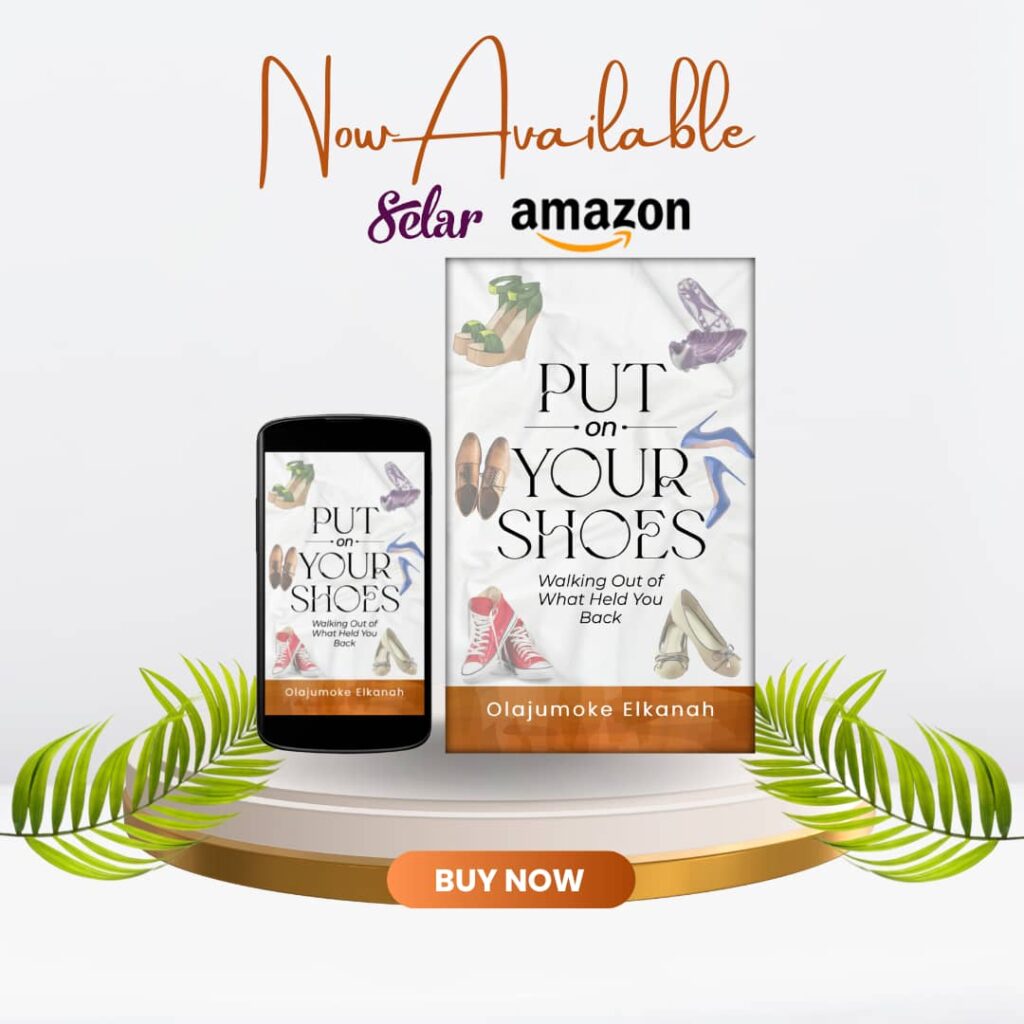
My new book, “Put On Your Shoes”, is finally ready available now on Amazon and Selar. 🎉

In it, I explore:

The different types of shoes we wear (literally and spiritually),

The significance of each one,

And why certain seasons require specific shoes – alignment, preparation, purpose.

It’s a journey through faith, growth, setbacks, and comebacks. And it’s full of stories (some funny, some deep) that will bless you.

So welcome to my next chapter. I’m walking into it barefoot, spiritually speaking, trusting God to clothe me again, one purpose-filled step at a time.

I love you, but Jesus loves you more.

Let’s go change the world, one shoe at a time.

Cerebral Palsy

Helping Hand for cerebralpalsy Foundation.

Our fundamental goal is to alleviate the daily hurdles by extending a helping hand and providing essential resources that families catering to children with cerebral palsy in Nigeria require.

At the core of our mission is the provision of basic necessities. We understand the myriad of challenges families caring for kids living with this condition in Nigeria face. This is why we offer essential supplies like medications, food, clothing, and indispensable continence aids such as diapers, wipes, and bed covers. These items are not just material support; they represent our commitment to easing the practical burdens faced by families in Nigeria.

Welcome to Cerebral Palsy Helping Hand, a beacon of support and assistance for families embarking on the journey of nurturing a child with cerebral palsy in Nigeria. Our fundamental goal is to alleviate the daily hurdles by extending a helping hand and providing essential resources that these families require.

However, our commitment surpasses mere provisions. We strive to enhance the overall quality of life for these families by facilitating access to crucial equipment. Whether it’s wheelchairs, standers, bath chairs, AFOs, or more specialized tools, we endeavour to bridge the gap, ensuring that these families have access to the necessary resources to improve their children’s daily lives.

But our support doesn’t end there. We recognize that navigating hospitals and therapy sessions can be overwhelming. Hence, we extend our helping hand by providing assistance during these crucial moments, ensuring families receive comprehensive support when they need it the most.

Above all, we are more than an organization; we are a community united by understanding, empathy, and support. Join us in our mission to create a network that fosters understanding, advocates for change, and supports each other through the challenges and triumphs of raising a child with cerebral palsy in Nigeria. Together, let’s make a tangible difference and create a brighter future for these families.

Contact Us:

Website: https://thehelpinghandcp.org/donate-now/

Instagram: https://www.instagram.com/thehelpinghandcp/

Before

From Legacy to Revival: Winner’s Garden New Home

A Journey of Faith, Community & a Church Reborn

From Atlanta to Salem: My Journey, and a Sacred Space Reborn
When I moved to Oregon in 2008 to join my husband—who had arrived just a month earlier—Salem felt like another world compared to Atlanta, Georgia, where I came from. It was small, quiet, but incredibly friendly. The first few people I met here gave me warmth I didn’t know I needed. But deep inside, I had come with a heavy heart, searching for answers—especially regarding my baby boy.

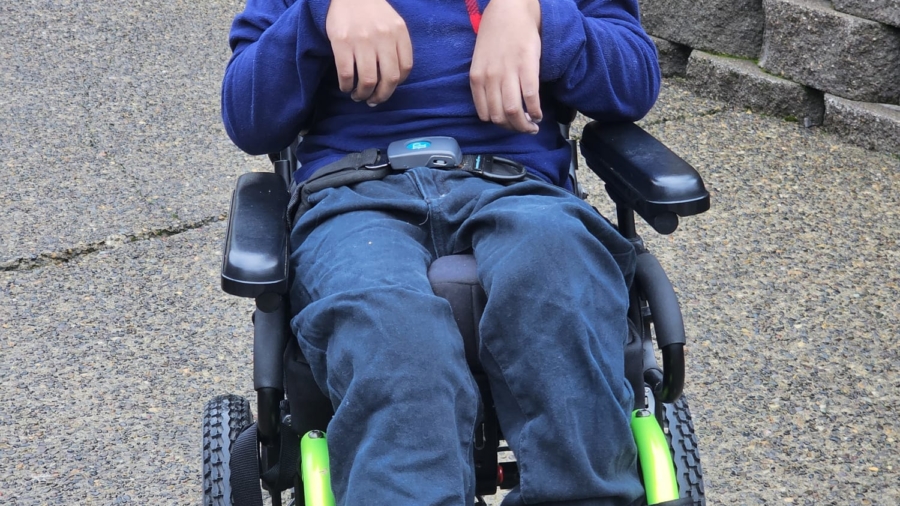
He wasn’t sitting up, crawling, or even holding things. Medical concerns weighed heavily on my mind, and the insurance battle felt endless—eight months of back-and-forth before any real headway. If you’d like to know more about that journey, the struggles, and the triumphs, I invite you to read my book: My Cerebral Palsy Story, available now on Amazon.

From Beauty School to Building a Community
After the dust settled a bit, I enrolled in beauty school. Though we were still attending church in Portland the only branch of The Redeemed Christian Church of God (RCCG) in Oregon, it was during this period that we started planting roots in Salem.

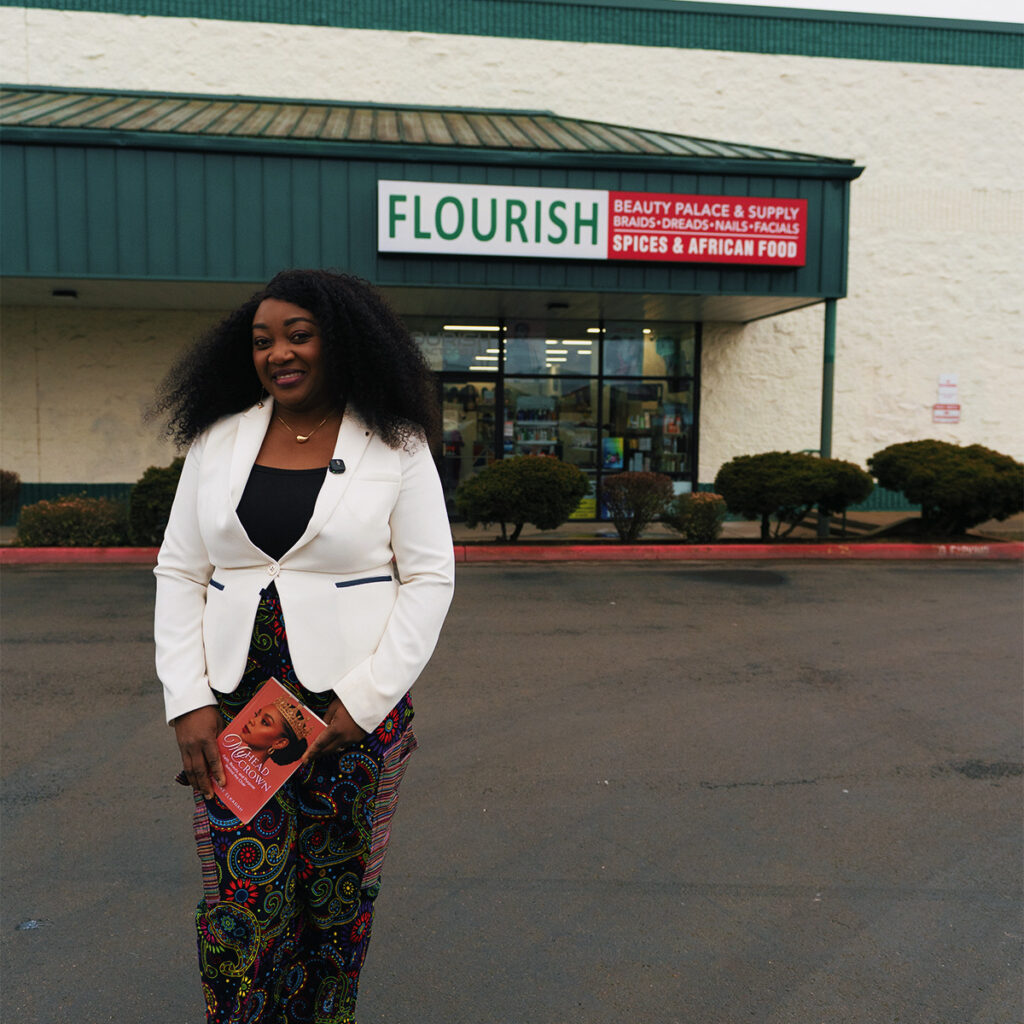
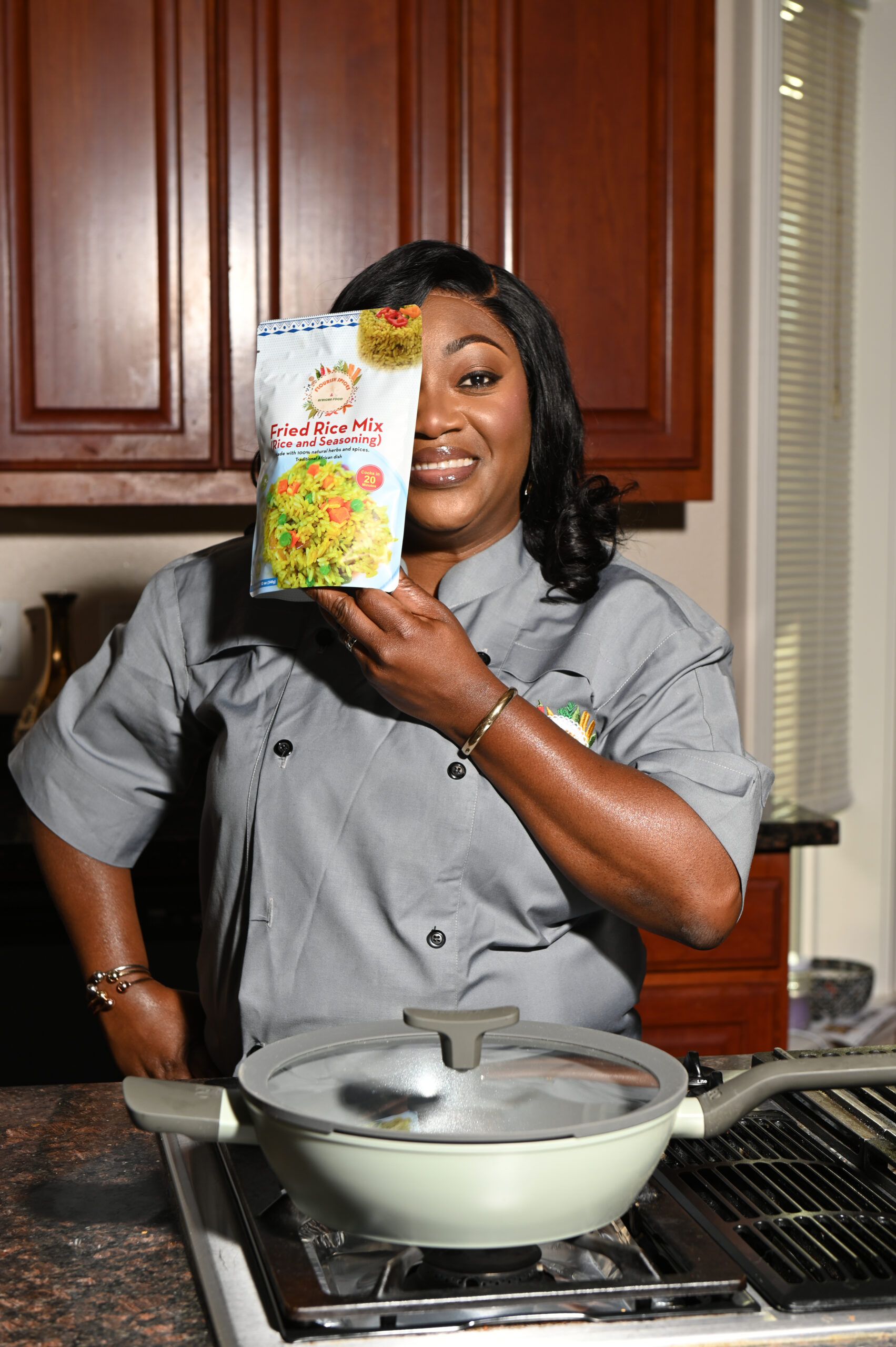
Not long after graduating from cosmetology school, God provided a salon for me within just 3 to 4 months. That salon became a second home—not just for me, but for many Africans and African Americans in the area. That’s how Flourish Beauty Palace was born.

It wasn’t the first African-owned salon in Salem, but it was the first owned by an African immigrant. Not someone born and raised here—but someone who came here carrying a different culture, a different background, and a whole lot of faith. I’ll forever be grateful for everyone who supported me—whether you stopped by to chat or dropped off some chicken nuggets for my baby.

Yes, that’s right—I would often braid hair with my baby tied to my back, and sometimes even my customers would hold him while I worked. What a beautiful, God-filled community Salem has been to us.

A Divine Encounter: Pastor Guessi Brown
One of my most memorable customers was Pastor Guessi Brown, who led the State Street Church of God. She would come in to get her hair done, and we’d pray together, share scriptures, and encourage one another. We connected over her experiences as a female pastor leading a church steeped in tradition but with prayer and perseverance, she triumphed.

Eventually, she moved to Seattle to be with her children, and the church she pastored went through several transitions—different ministers, then other churches. I visited the building a couple of times for women’s conferences, but never once imagined that our church would ever be connected to that same space.

A Forgotten Building Finds New Life
Years later, I noticed the building was being used as a homeless shelter by Seed of Faith Ministries—a noble mission. Then, in March 2024, our real estate agent called us with a property listing. We went to take a look.

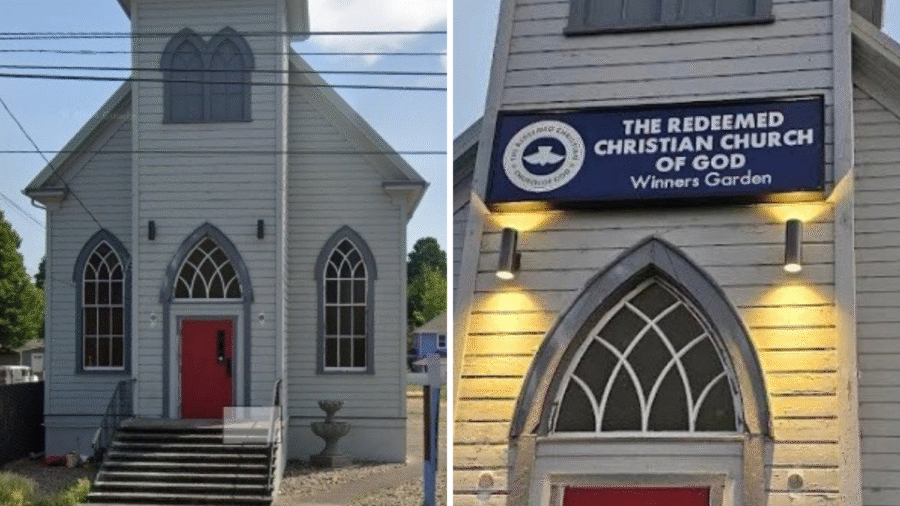
To our surprise, it was the same church building at 1760 State Street—the one we had never paid much attention to before. But as soon as we walked in, my husband and I felt a deep connection. God confirmed it immediately by putting the exact amount needed for the down payment into the church account.

By June 2024, RCCG Winners Garden had its first service in that building. God was breathing revival back into a space that had once carried His name—and now, once again, it would serve His people.

A Historical Look at 1760 State Street
This church building isn’t just any structure—it’s a piece of Salem’s religious history.

1900 – Land deeded by C.N. Potter, likely when the church was first built for the Evangelical Lutheran Christian Church of Salem.

1966 – Purchased by State Street Baptist Church.

1976 – Became home to the Church of God (Pentecostal).

1990 – Celebrated 100 years of worship.

2020 – Purchased by Bishop Wade Harris, founder of Seed of Faith Ministries.

2024 – Acquired by RCCG Winners Garden.

Architecturally, the church reflects early 1900s Gothic Revival—arched windows, a gabled roof, and a full basement used for gatherings and meals. It has faithfully served many denominations and continues to stand as a spiritual anchor in Southeast Salem.

Gratitude for Bishop Wade Harris
Bishop Wade Harris didn’t just preserve a building—he preserved a legacy. He grew up in that church and couldn’t bear the thought of it turning into a nightclub or dispensary, as has happened with other former churches. Instead, God used him to keep the building in Kingdom use, and for that we are eternally grateful.

What a purpose-driven calling Bishop Harris has embraced—faithfully serving Salem through housing efforts, outreach, and now, helping RCCG Winners Garden continue the mission.

A Prophetic Dream Fulfilled
Years ago, my husband had a dream of a church building with a cross in front of it, but no location. When we acquired this church, the Holy Spirit reminded him of that very dream. This was it—a prophetic fulfillment we didn’t even know we were waiting on.

Our Jesus Care Ministry: Serving the City
Our work didn’t stop with Sunday services. Every third Sunday, after worship, we head downtown—just by the bridge leading to West Salem—to feed the homeless through our outreach: our Jesus Care Ministry, led by Elder Wendell Stoller.

A Living Puzzle Still Unfolding
If you’ve read this far and know anything more about the building’s early days—or if you once worshipped here—we’d love to hear from you. Drop a comment, help us fill in the missing pieces of this sacred space’s story.

And if God moves your heart, know this: RCCG Winners Garden Salem is a fertile ground to sow a seed. We are growing, we are serving, and we are giving God all the glory.

Thank you. And may God bless you richly.